The Board of Directors believes that a robust and globally recognized academic program will ensure the highest possible success for the school. Vision International School uses curriculum standards that are based on an American curriculum. As an international school offering an American curriculum, VIS bases its programs of study for grades 1–12 on globally recognized standards, including the Common Core, AERO (American Education Reaches Out), and Next Generation Science Standards. AERO is a project supported by the U.S. State Department’s Office of Overseas Schools and the Overseas Schools Advisory Council to assist schools in developing and implementing standards-based curriculum abroad.
Grade levels, Pre-K through Grade 12
Divisions, each in its own dedicated section
Technology through Google Workspace for Education
NEASC-accredited American programme

From play-based early years to a college-ready high school, each division is housed in its own dedicated section of the campus.

At Vision International School, assessment is an essential part of the teaching and learning process. Assessments are designed to support student growth, monitor progress, and guide instruction while helping students develop confidence, independence, and a deeper understanding of their learning. We use a balanced approach to assessment that values both academic achievement and the development of critical thinking, communication, collaboration, and problem-solving skills. Assessment practices are aligned with our curriculum standards and are used to provide meaningful feedback to students and families throughout the school year.
Assessment for learning takes place continuously throughout instruction and is used by teachers to guide teaching and support student progress. Teachers gather information through observations, class discussions, questioning, quizzes, practice activities, and student work samples to identify strengths and areas for improvement. This ongoing assessment allows teachers to adjust instruction, provide targeted support, and ensure that all students are progressing toward learning goals.
Assessment as learning encourages students to take an active role in their own learning journey. Students reflect on their progress, set personal goals, monitor their understanding, and use feedback to improve their work. Through self-assessment, peer assessment, and reflective learning activities, students develop independence, responsibility, and critical thinking skills that help them become confident and lifelong learners.
Assessment of learning measures student achievement at specific points in time and evaluates how well students have met curriculum expectations and standards. These assessments may include unit tests, projects, presentations, performance tasks, benchmark assessments, and end-of-term evaluations. The results help teachers, students, and families understand overall academic progress and achievement while informing future learning goals and instructional planning.
Ready to see the learning in person?
At Vision International School all students will be provided with a rigorous and relevant educational path to support individual development at the highest levels. This will be accomplished through the experiential, problem-based approach in which we make content and skills standards come to life for students by connecting learning to relevant issues, their specific learning needs, and authentic audiences. Academic content is charged with rigor through the curricular structures of learning expeditions, case studies, projects, fieldwork, engagement with community experts, service learning, and exhibitions of student work.
The elements of our curriculum are approved by the Ministry of Education of Qatar. Together they form a curriculum vision and approach known as Expeditionary Learning. We apply this approach to immerse students in the culture, history, geography, language, and arts of the host region. We provide multiple ways for students to express their personal learning style and show what they know and are able to do through authentic assessments coupled with research-based differentiated and individualized instructional practices.
Our foundational theories are consistent with our principles of learning and designed to create independent learners with personal integrity, intellectual character, and interdependent community leadership skills. These skills are accomplished through integration of the following new Bloom’s Taxonomy and strategies:
Provides a wide range of experiences and programs that actively engage students and promote their growth intellectually, physically, aesthetically and socially while developing a depth of character that exhibits empathy, a sense of service, moral courage and humility.
Sparks a passion in every student for learning and to become intensely immersed in their own education as its own reward. This will be accomplished by the provision of student-centered learning experiences that are real and relevant to the student and under the guidance of caring, nurturing teachers that recognize each child as a unique individual.
Instill global citizenship by celebrating the culture and traditions of Qatar and other countries of the world. By experiencing the world through the eyes of others, and recognizing our similarities and differences, students become more grounded in their own culture, values, and traditions while gaining a broader understanding and appreciation of human diversity.
Our after-school program forms an essential part of students’ holistic education and, although optional, all students are encouraged to participate. Once enrolled, students are expected to attend regularly and to be punctual.
Participation in ASAs is voluntary, but we require parents to consent to their child’s participation. Students will not be allowed to participate without a completed registration form, filled in online by parents.
Students must be collected from school immediately after the end of the ASA. Students who are not collected on time will not be permitted to continue with their ASA.
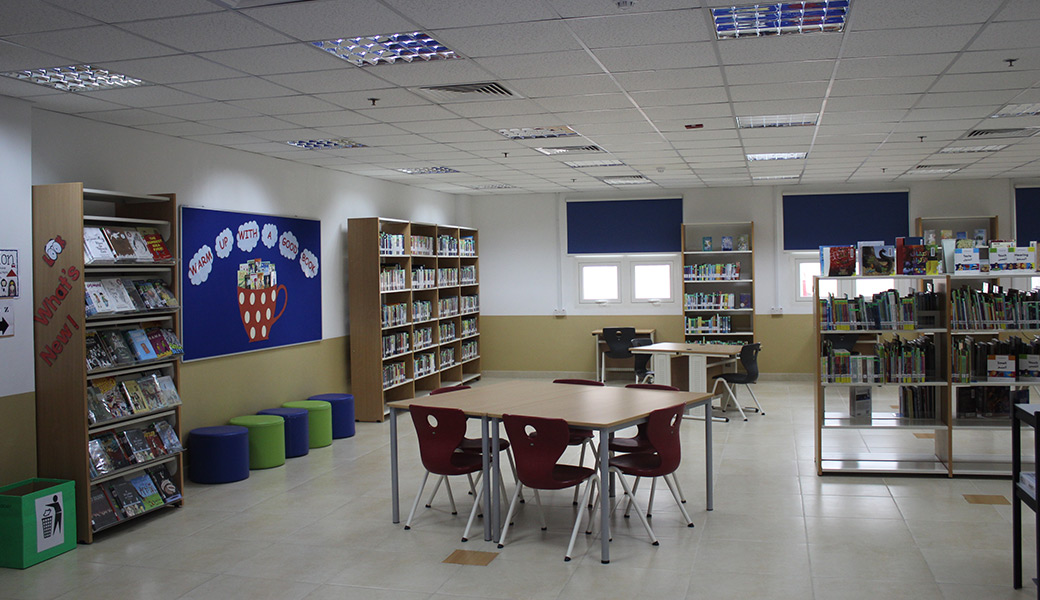
The mission of the Vision International School Library is to help students become satisfied readers, effective users and producers of ideas and information, and enthusiastic life-long learners.
The VIS library owns a collection of more than 21,000 books and will be constantly maintained at the highest level with the support of Follett International. Our library is divided into three sections: The Main Library, servicing Grades 3 through 12, contains a Girls’ Section and a Boys’ Section, with a common Information Services Desk in the center. Each section contains the following collections: teacher resources, picture books, early chapter books, series collections, fiction books for grades 3-6, fiction books for grades 7-12, non-fiction section, and a reference section. The books are also marked with their appropriate reading level to help students be successful, and encourages a passion for a lifelong love of reading. A well-resourced Professional Development Collection for faculty is also available inside the Main Library. An Early Childhood Library is located on the Ground Floor, for our preschool through Grade 2 students.
Early Childhood Level Students and Elementary Level Students may borrow books for a one-week period with the option to renew for another week when needed. Middle and High School Students receive a 2-week Loan Period, with the option to renew.
The Library is open from 6:45 AM until 1:45 PM Sunday through Wednesday; and from 6:45 AM until 12:15 PM on Thursdays.
Veronica L C Stevenson-Moudamane; MSLS, MA